Sunday, October 16, 2011

Linguine with Brussels Sprouts, Shallots, and Asiago


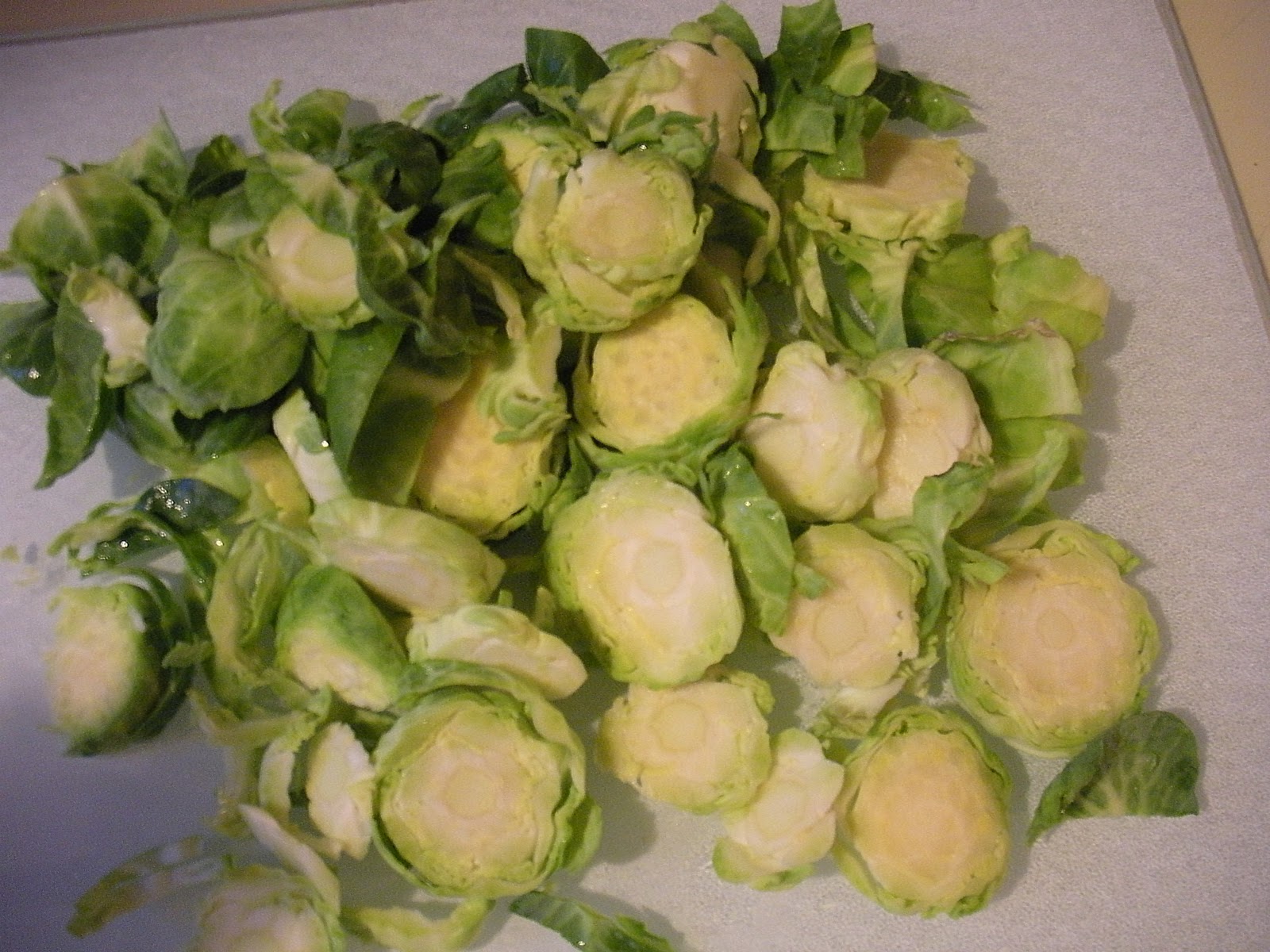
This week I chose to use Brussels sprouts as my main ingredient.  Brussels sprouts have a reputation for being one of those really gross vegetables that kids don’t want to get anywhere near.  Until last year, I had never tried them out of fear from their reputation.  I figured if it was scorned by kids the world over there would be no chance of me ever liking it.  However, after really looking at them for the first time I realized that they just looked like little heads of cabbage, and cabbage was something that I had grown to like.  After taking the risk and trying them for the first time, I learned that they’re really quite tasty little vegetables and I was eager to try new recipes with them.

Brussels sprouts look really, really cool when you see them on the stalk.  Most of the time when you see them at the store they have already been trimmed away from the stalk and are sold looking like the little mini heads of cabbage that they are.  However, they don’t look like cabbage when they are grown.  They grow on a tall, narrow stalk, and the part that is eaten are the little buds that grow along the side of the stalk.  I think one of the first places I ever saw Brussels sprouts in their natural form was on the ride “Living with the Land” at Epcot in Disney World, where they were grown hydroponically.  Growing them hydroponically just made them look even that much cooler.


Although named for the capital of Belgium, I was intrigued to learn that Brussels was not their place of origination.  The first Brussels sprouts were actually grown in Ancient Rome, where they were cultivated from a form of wild cabbage.  However, they first became popular while being grown in Belgium in the 13th Century, and they quickly spread throughout all of Europe and eventually to the United States.  I just realized while researching Brussels sprouts how food-oriented Belgium is in its popularity.  I mean, I honestly know nothing about the nation other than the fact that it has waffles, chocolate, and Brussels sprouts.  What other nation is known primarily for its food?  I can’t think of any.  Today the Netherlands are the largest producers of Brussels sprouts, followed by Germany.  The United Kingdom is also a big producer of the vegetable, rivaling the Netherlands in the amount of Brussels sprouts produced each year, but it is not exported to other countries. 


Brussels sprouts were first brought to the United States in the 18th century by French settlers who came to Louisiana.  (For those of you like me who know nothing about Beligum, it is located directly north of France).  They quickly became popular, and even Thomas Jefferson is known to have grown them at Monticello.  Their growth rapidly expanded along with the boundaries of our nation, and today the largest areas of production in North America are in California, Baja California, and Washington.  Perhaps the true manifest destiny of our nation was to grow Brussels sprouts on the west coast.     


Brussels sprouts grow the best in cool areas where the temperatures are generally between 40 and 70 degrees Fahrenheit.  They reach their peak in autumn through mid-winter, becoming sweeter in flavor after a mild frost.  They have many nutritional benefits, including a good amount of Vitamin A, Vitamin C, folic acid, and dietary fiber.  Unlike most green vegetables, Brussels sprouts are also high in protein.  Although they lack the full spectrum of amino acids, when paired with whole grains the full spectrum is achieved.  Too bad I didn’t know this ahead of time or I would have bought whole-grain pasta instead of regular.    

Brussels sprouts also contain a compound known as sulphoraphane, a chemical believed to have very potent anti-cancer properties.  However, as the name implies, this compound also contains sulphur, which isn’t exactly known for having a pleasant smell.  If Brussels sprouts are overcooked, the sulphur smell becomes more noticeable, resulting in the belief that Brussels sprouts stink or taste gross.  When cooking this dish I decided to be extra careful not to overcook them.


This recipe starts by roasting 2 whole shallots in the oven at 400 degrees Fahrenheit for about 35 minutes.  Peel the shallots and place them in a small baking dish.  Drizzle with olive oil and a little salt and pepper, wrap in foil, and roast until they’re tender.  After they have cooled, cut them into slices and set aside for later.
While the shallots are roasting, thinly slice one pound of Brussels sprouts and grate ¼ cup (2 oz.) Asiago cheese.  
 

Boil a large pot of salted water, add one pound of pasta and cook until al dente, about 6 or 7 minutes.  Remove 1 cup of the pasta water and drain the pasta.

While the pasta is cooking, heat 1 tablespoon of butter in a large saucepan over medium-high heat until lightly browned (careful not to burn it!).  Stir in the Brussels sprouts along with a pinch of salt and ½ teaspoon of sugar.  Cook, stirring often, until the Brussels sprouts begin to soften, about 6 to 8 minutes.  Add 1 tablespoon red wine vinegar and cook for about one more minute.  

Reduce the heat to medium-low and add ¾ cup heavy cream and the shallots.  Season with salt and pepper.

Add the Brussels sprouts to the drained pasta and stir well. 
 
Add some of the reserved pasta water if it seems dry.  Transfer to a serving dish and sprinkle with the Asiago cheese. 

This dish was really good, and I was surprised at the sweetness that I tasted from the Brussels sprouts and the shallots.  Roasting the shallots really gave them a good flavor.  I will admit that the original recipe called for 5 shallots, not 2.  However, I didn’t pay attention to the amount of shallots before I went shopping, so I just grabbed a pack of shallots thinking that would be enough.  I think adding a few more shallots could have definitely helped make the shallot flavor more noticeable, but even with just 2 I still thought it ended up tasting good.

Since I feel kinda bad about not knowing anything about Belgium, here are some fun facts:
  • Smurfs are Belgian.  
  • The city of Ypres is the site of the Cat Festival. This dates from the medieval ritual of throwing cats off the top of the belfry. Today's politically correct society dictates that stuffed toy cats be hurled instead.
  • There are more castles per square mile than anywhere else in the world.
  • The first recorded lottery to involve buying a ticket and distribution of prize money was held in Bruges on February 14th, 1466.  It was held to raise money for the poor of the town.
  • French fries actually originated in Belgium.  (What?? So they are known for chocolate, waffles, Brussels sprouts AND French fries? What a cool place to live for a person who loves food.)
  • Napoleon Bonaparte was defeated in the Battle of Waterloo, and Waterloo is in Belgium.
  • Belgian endives! I just thought of another food to add to the list!
  • Education is required by law to all children until the age of 18 in Belgium.
  • A Belgian founded the Holy Roman Empire.
  • Belgium has one of the lowest proportions of McDonald's restaurants per inhabitant in the developed world, which is 7 times less than the United States.
  • Belgium is one of the few countries in the world where it is required by law to vote.
  • Europe's first modern health resort opened in the town of Spa in the 18th century.
  • Belgium has 3 official languages: Dutch, French, and German.
  •  


    Sunday, September 25, 2011

    Spicy Broccoli Rabe Bruschetta

    The first vegetable I chose to cook with is Broccoli Rabe, a traditional Italian vegetable.  I chose this particular vegetable because it is one that I have tried before and I know I like it.  However, the only time I tried it was when it was sauteed with garlic and olive oil, so I decided to go for a bit more adventuresome recipe.  Technically "bruschetta" refers to bread that has been basted with olive oil, garlic, salt, and pepper.  However, since the only way I had ever seen buschetta was topped with tomatoes, garlic, olive oil, and basil, I was under the apparently common misconception that bruschetta was the topping, not the bread.  This was the first time I had ever seen a recipe for bruschetta topped with something other than the tomato mixture, so I was eager to try something unique.

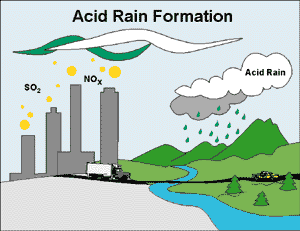
    I had hoped that this cooking adventure would be an educational experience for me, and so far I'm right! I LOVE Italian cuisine so I was happy to learn what bruschetta really is.  Also, this experience has made me realize that I have more experience with broccoli rabe than I previously realized. When I was in 9th Grade, one of the requirements for my Honors Biology class was that all students write a research paper based on an experiment that we had to design and carry out, and then we had to submit our papers to the Virginia Junior Academy of Science for evaluation.  Well I had no idea what I wanted to do research on, so instead of trying to be creative, I turned to a science supply catalog that my teacher had and basically ordered a "science experiment in a box" as I liked to call it.  My research would be investigating the effect of acid precipitation on a plant that was called brassica rapa.  I had no idea what this plant was and honestly I didn't care.  I was just happy to finally have an idea for this experiment and happy to have all the supplies I needed to get started.  (On a side note, the "science experiment in a box" also came with extra supplies for which I couldn't quite figure out the purpose.  For example, I had two containers of dead honey bees.  I'm pretty sure I still have them in my closet.  Maybe my next experiment can be "The effect of 10 years on the bodies of dead honey bees"?  I'm also pretty sure we still have bottles of nitric and sulfuric acid of various molarities in our garage.  I feel like these things would be identified as peculiar should we have our house searched.)

    Anyway, so to make a long story short (or is it too late?)  I just found out through my research on broccoli rabe that brassica rapa, the plant on which I conducted my study, is actually broccoli rabe.  Now I almost feel bad about soaking this yummy plant with nitric and sulfuric acid all those years ago.  However, I should report that the acid did not have a significant effect on the plant's growth.  So what's the lesson here?  We should all learn to love broccoli rabe, because should acid rain prove to be a serious problem in the future and eliminate most plant life forms, broccoli rabe will most likely be able to endure the pollution.

     
    So back to the cooking.  Broccoli rabe is a vegetable that has a very bitter, pungent flavor.  It is also rich in vitamins A (good for the eyes), C (gotta keep away that scurvy!), and K (aids in blood clotting), and potassium (necessary for the function of our cells), calcium (fights osteoporosis), and iron (used by hemoglobin in our red blood cells to transport oxygen from the lungs to our body tissues).  The buds of its flowers closely resemble broccoli, hence its name.  All parts of boccoli rabe can be eaten: stems, leaves, and flower buds.

    The ingredient list for this recipe was not very extensive.  All I needed was about a pound of broccoli rabe, olive oil, a baguette, garlic, salt, red pepper flakes, and ricotta cheese.  
     
    To start, cut the broccoli rabe stems into 1/4 inch pieces and coarsely chop the leaves.  Preheat about 3 tablespoons of olive oil in a frying pan over medium heat.  Add 3 cloves of chopped or minced garlic and 1/4 teaspoon red pepper flakes. Saute until the garlic is softened but not quite brown (about a minute).


    Add the chopped broccoli rabe and season with some salt.  Cook until all of the leaves are wilted, about 10 minutes. 


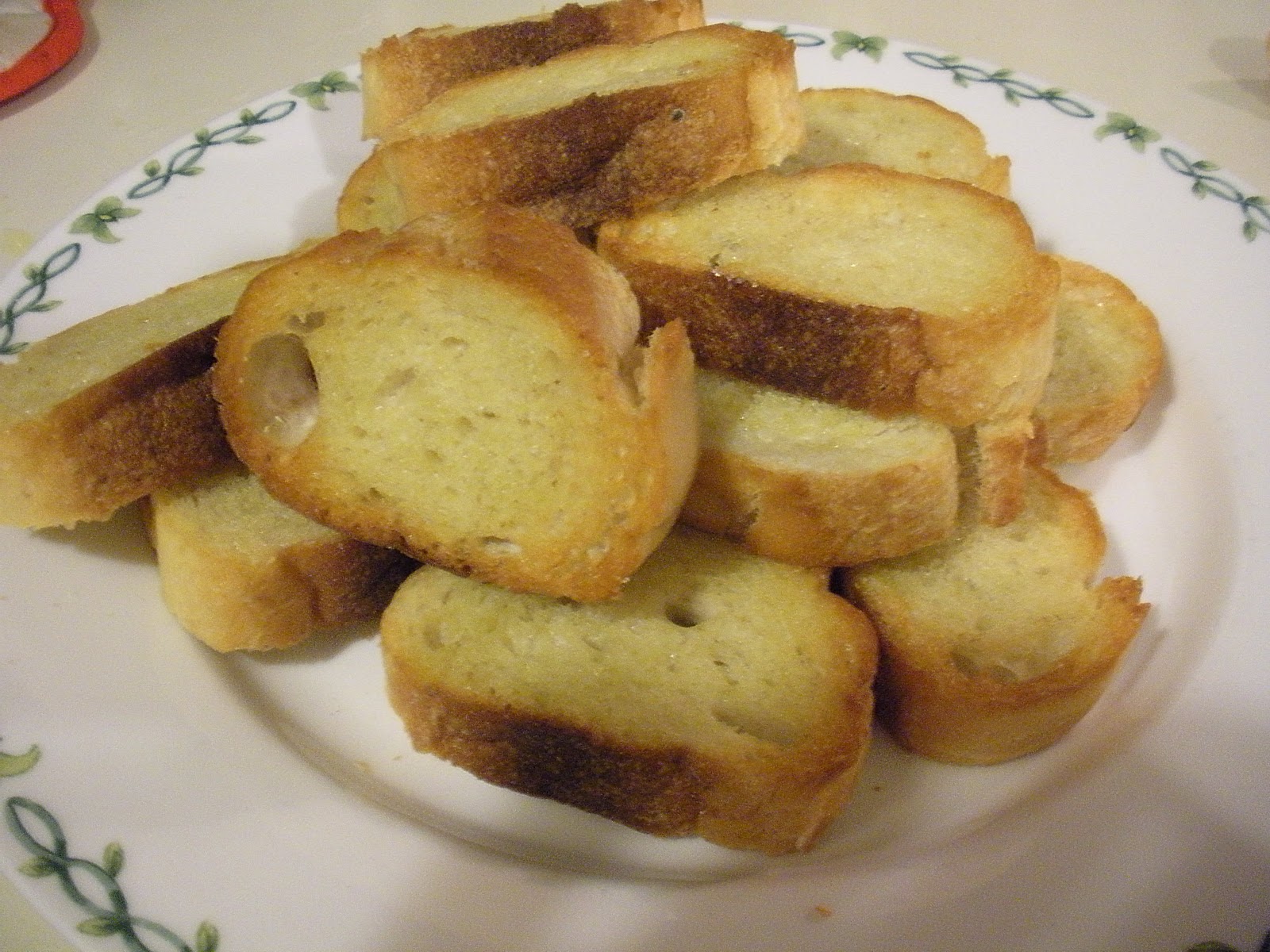
    While the broccoli rabe is cooking, cut the baguette into 1/2 inch slices and brush on both sides with olive oil.  Lightly salt.  Pop in the oven under the broiler for about 2 minutes on each side, just until they are crunchy. 


    Spread the slices with ricotta cheese, and then top with the cooked broccoli rabe.  

     
    And that's it! This was a very simple recipe, but it ended up being quite delicious.  As previously mentioned, broccoli rabe is very bitter on its own.  However, the creamy ricotta on the bread really tempered the bitterness.  I love garlic, but I have to say that the three cloves this recipe called for only created a mild garlic flavor.  If you really love garlic, I'd recommend adding a little bit more.  Also, the recipe was called "Spicy" Broccoli Rabe, but the 1/4 teaspoon red pepper flakes didn't make it very spicy at all.  If you like spicy foods I'd say to add more red pepper flakes to really increase the heat. 


    Broccoli rabe is certainly a keeper! I can't wait to make this recipe again and experiment with some other recipes!

    Saturday, September 24, 2011

    Introduction

    Hi!

    I'd like to start by introducing myself and describing what this blog will be like.  My name is Jaime Bunting and I am 26 years old.  I am in my 4th year of teaching 3rd Grade in my hometown of Gloucester, Virginia.  I love to read, watch Jeopardy!, run, and COOK! We have two very sweet labs named Kenai and Nala.


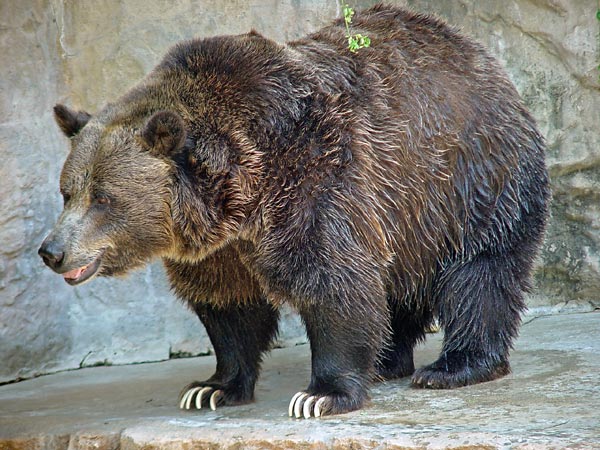
    Oh, oops.  My mistake.  That top picture isn't Kenai.  But if you knew Kenai you would understand my confusion.  He's a 105 lb. chocolate lab that seems to be about the same size as a grizzly bear.  The main difference is that Kenai is way sweeter and more lovable than a grizzly.  


    I also have a mild obsession with Disney World.  We go several times a year, and our favorite thing to do is sample all the different foods in the restaurants there.  I get my love of food and cooking from my mom, who has earned a reputation as an excellent cook.  We spend a lot of our time in the kitchen cooking new things, and when we're not in our kitchen we love to visit different restaurants to see what the people in their kitchens are cooking.


    I guess I should explain the title of my blog, "The Reformed Eater."  Well, when I was growing up, I was the definition of a picky eater.  The only vegetable I would touch was corn, and that was only if it was fresh from my dad's garden.  I thought anything green must be laced with some sort of deadly poison, because I couldn't come up with any other explanation for why it tasted so awful.  I didn't like many fruits either, limiting myself to apples IF they were really crunchy and sweet.  The only meat I really liked was chicken, primarily in the fried form.  I could handle a steak every now and then ONLY if it was well done with absolutely no pink whatsoever.  Hamburgers were okay - if they were paper thin like the fast-food hamburgers and didn't have any toppings.  (One example of my picky ways - ketchup.  I would dip my fries in it but wouldn't want it anywhere near my burgers.)   

    One area where I was much less picky was in the junk food area.  If it had chocolate and/or was considered unhealthy in general, I would eat it.  Heavily processed treats, the worst kind, were my favorite - if it was a little chocolate cake filled with cream and wrapped up in cellophane I loved it.  A typical lunch when I was in elementary school would consist of a mayonnaise and American cheese sandwich (I was picky when it came to which kind of meats I liked so my mom would leave it off), potato chips or some sort of cheesy puff thing, and a snack cake of some sort.  I should note that my picky eating was not from lack of my mom trying to get me to eat healthy foods.  She was always trying to get me to eat more vegetables and fruits, but being the stubborn, picky kid that I was, I wasn't having any parts of her healthy meals.  It was not unusual for my mom to have to cook two meals at suppertime - one for her, my dad, and my brother, then another meal for me because I didn't like what they were having.  

     And as I mentioned earlier, my mom has always been a great cook.  When we would have people come over to our house she would spend hours preparing all sorts of dishes to serve them, and usually I'd end up skipping everything and waiting for dessert.  See this table full of food?  All I was thinking about was the cake.

     
    As I got older I started joining my mom in the kitchen, mainly focusing on cakes, cookies, and brownies, as they still constituted about half of the total food I consumed each day.  I gradually began adding more recipes to my repertoire, until finally I realized that I really loved to cook and wanted to start cooking a whole lot more.  When we first got cable I remember sitting in front of the TV glued to The Food Network for hours at a time, taking in all of the chefs' cooking tips and techniques.  I'd think about how pretty the food looked, but I wondered why they always insisted on using those poisonous green vegetables, among other healthy ingredients, rendering those beautiful dishes unpalatable to me.  For a long time I stuck to just cooking unhealthy, artery clogging basics, like this coconut cake from when I was in middle school.


    But gradually, I began to change.  When I was in college I majored in Kinesiology, which meant I took classes on all aspects of health and fitness, including nutrition.   I slowly began to realize that the foods I had been eating, although delicious and readily available thanks to the prevalence of processed, ready-to-serve serve meals at the grocery store, were truly causing harm to my body that could lead to major problems as I got older.  I decided that I needed to really start thinking about my future rather than the desires of my picky taste buds.  

    So over the past 5 years or so I have really started to change my eating habits.  I've begun to embrace the organic, unprocessed foods that I previously thought looked gross or boring.  My mom has also begun to see the importance of eating fresh foods as well.  Together we've been making an effort to reduce our intake of processed foods (especially processed meats) and increase our intake of fresh, organic fruits and vegetables.  I'll admit to still be slightly picky in some areas.  For example, I still have a hard time with eating fruits - they always seem either too sweet, too bitter, or too seedy for my liking.  But I really have opened myself up to a whole new world of foods.  


    For the first time in my life I'm eating things like salads and yes, even those poisonous green vegetables.  The crazy thing is that I'm not just forcing them down either, I'm finding that the more I try new things the more I actually like them! It's a new experience for me to go to a restaurant and actually have more than one thing to choose from on the menu.  Also, just a month ago I actually ordered my first ever hamburger with all the toppings! And I liked it! I even took a picture because I was so proud of the fact that I was eating it.


    So that brings me to this blog.  I was recently at work and spotted a cookbook called "Cooking from the Farmer's Market".  As I flipped through the pages I was amazed to discover that I really wanted to try these recipes that used fresh fruits and vegetables.  I quickly ordered the book and leafed through every page as soon as I received it in the mail, stopping to admire how savory and delectable all the pictures looked.  Who knew that the kid who grew up eating chicken nuggets and macaroni and cheese would ever end up having her mouth water by looking at recipes involving peas and cabbage?  I decided that I would make it my goal to cook a recipe using every fruit and vegetable in the cookbook, most of which I still haven't had a chance to ever try before.  With my new reformed eating habits I'm confident that I'll enjoy both cooking these new foods and eating them.  I can't wait to cook my way through the supermarket's arsenal of fresh fruits and vegetables and share my experiences on this blog.